Breath is vocal power! Without airflow, the body can not produce voice. Fascial restrictions and held postural and tension patterns can decrease respiratory range of motion. This affects air capacity, generation of pressure, coordination and control of airflow. Free and efficient respiration drives vocal loudness, voice quality, vocal stability, and the ability to sustain a phrase without running out of breath.
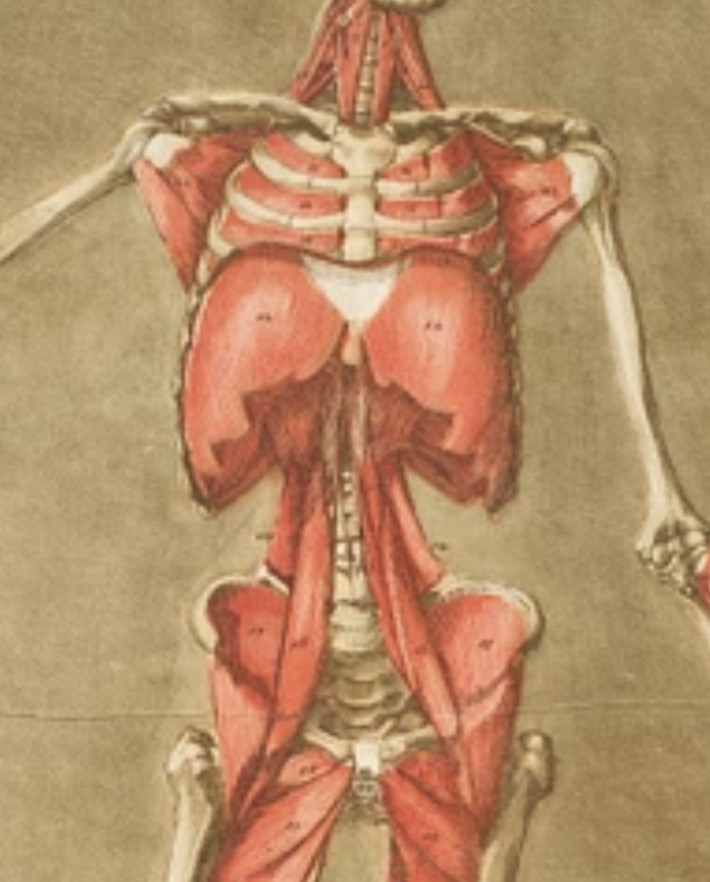
Breath is not generated by the lungs. Aside from elastic force, the lungs are passive. Inhalation is primarily generated by a flat sheet of muscle called the diaphragm (see image for the dome shape muscle under the ribcage). When we inhale, this dome descends, drawing air into our lungs. This action displaces our abdominal organs, pushing our belly out. When we carry too much abdominal tension, or the diaphragm itself carries tension, its range of motion can become restricted, decreasing our breath capacity. The diaphragm ‘s movement can also be affected by muscles connected to it by fascia including the hip flexors (psoas and iliacus: see long muscles running from near center of diaphragm to femur and from pelvis to femur) and the QL (long muscles running up from pelvis to back, near diaphragm). There are also many muscles that expand the ribcage and clavicle to draw air into the lungs.
Expiratory pressure (vocal pressure), is primarily generated by the abdominal muscles (the same abdominals that we need to relax so the diaphragm can descend when we take a breath). This pressure is also generated by the many muscles and connective tissue that compress the ribcage as well as the passive elasticity ribcage and lungs as they returns from an expanded position.
My breathwork service integrates manual breathwork to help release muscle and fascial restriction affecting breath capacity, with respiratory muscle strength training and coaching to increase power, stability and efficiency.