To generate voice, the nervous system, commands and integrates muscle movement throughout the entire body. Within the stable frame of your posture (working against gravity and pushing off the ground), the muscles of the respiratory system generate air pressure. This air pressure creates airflow. Muscles within the larynx bring the vocal folds together and as airflow moves in between them, they vibrate.
During vocal fold vibration vibration, muscles outside the larynx adjust its position, tilting it forward or back. This lengthens or shortens the vocal folds altering pitch. Other muscles raise or lower the larynx altering the resonant quality of these vibrations. As the vibrations move through the vocal tract, their resonance is further shaped by the many muscles of the throat against the tongue. Finally their resonance is shaped by the muscles of the lips and mouth as the vibrations are articulated into the air as sound.
Along with the many muscles attached to the structures involved in these processes, a connective tissue called fascia also influences their movement and range of motion. Think of fascia as a multi-layered web that connects every organ, muscle, bone and cell in the body. Fascia can adapt to poor posture and movement patterns, restricting natural balance, free range, motion, and overall function.
A balanced amount of muscle and fascial tension to efficiently power the vocal system is vital. However, too much tension can restrict the voice. Excess, held, or misdirected tension can restrict breath capacity, loudness, vocal fold vibration, sound quality, vocal range, vowel production, and articulation. Over time singing through restriction can cause fatigue, hoarseness, injury, and/or disorder.
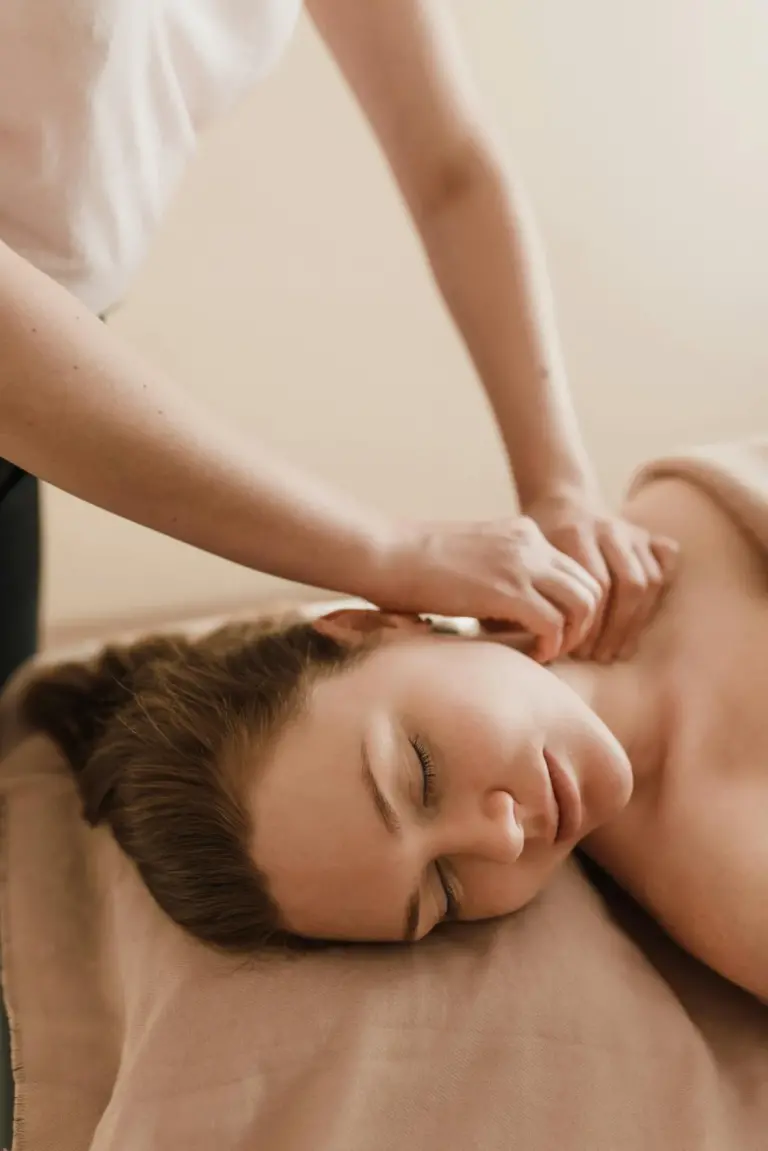
The Magliano Voice Massage Protocol is performed on a heated table with relaxing lighting and music set to your comfort level. Using careful tissue palpation, we will identify and release restrictive fascia and soft tissue impacting all accessible structure and processes of voice production (posture, respiration, phonation, resonance and articulation), including adjacent muscles that may contribute to vocal tension or discomfort. Whether your goal is recovery from vocal injury or fatigue, freer breath, increased vocal efficiency, or improved structural movement and performance, this focused and detailed work integrates Swedish and deep tissue massage, fascial techniques, guided breath and assisted stretching to help you meet your voice goals.